Book Embroidery Design Review
First Impression: Clean, Clever, and Quietly Confident
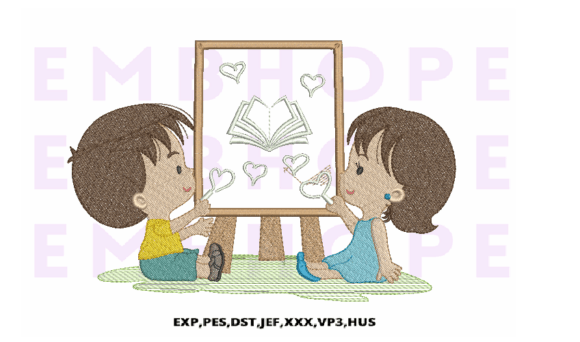
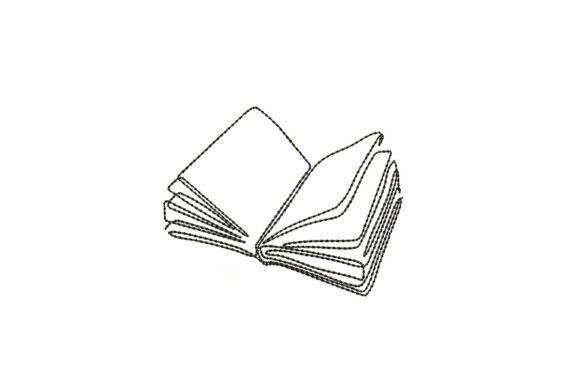
As an embroidery designer who’s prepped over 200 craft fair booths—and shipped thousands of machine embroidery designs to Etsy sellers, boutique makers, and small shop owners—I opened Book expecting a literal illustration. Instead, I found something more valuable: a design that feels modern, minimal, and quietly clever. It doesn’t shout “Back To School”—it leans into timeless curiosity, intellectual charm, and handmade warmth. That makes it unusually versatile. At a crowded market, where bold fonts and cartoonish motifs dominate, Book stands out by being refined but approachable, decorative without being fussy, and elegant without feeling stiff.
Where Book Shines on Craft Fair Products
Book is a rare embroidery file that performs beautifully across multiple product categories—especially when you’re curating a cohesive booth display. Here’s how it lands in real-world use:
- Tote bag design: Perfect as a centered chest logo or subtle side accent. Works equally well on natural canvas, linen-blend market bags, and structured cotton twill. Customers pause longer when they see it—not because it’s loud, but because it invites reflection.
- Apron embroidery: Ideal above the pocket or along the waistband. Its clean lines read clearly even from 6 feet away, and the open negative space keeps it breathable on heavy fabric.
- Tea towel embroidery: A standout on flour-sack or textured linen towels. The design’s simplicity avoids competing with fabric texture—unlike dense florals or intricate monograms that get lost on uneven weaves.
- Embroidered patch: Translates cleanly to iron-on or sew-on formats. Holds shape well at 2.5”–3.5”, and its balanced proportions mean it won’t warp or pucker during production.
- Pillow cover & small pouch: Scales down gracefully. No tiny lettering or fragile stems to vanish at smaller sizes—just confident, readable form.
What Makes Book Sell (and What Requires Care)
This isn’t just about aesthetics—it’s about sellability. At a craft fair, customers decide in under 3 seconds. Book wins because it’s instantly legible, emotionally resonant (“I’m thoughtful,” “I love learning,” “This feels like *me*”), and photograph-ready for Etsy listings and Instagram stories. Its open composition means it photographs crisply—even on dark fabric—without requiring extra lighting or post-processing.
But practicality matters just as much. As a working embroidery designer, I always ask: Can I produce this 20x before noon? With Book, yes—provided you follow key prep steps:
- Test the embroidery file on scrap fabric matching your final product (e.g., tea towel weight vs. denim).
- Check thread contrast early—especially if stitching on charcoal, navy, or black. Light neutrals (oatmeal, soft sage, warm ivory) pop beautifully, but avoid pale yellow on cream without testing.
- Review spacing and stitch density. While Book avoids extreme fill areas, some versions may include fine interior linework—verify clarity on textured surfaces like terry cloth or looped toweling.
- Confirm hoop size compatibility. Most standard commercial hoops (4×4”, 5×7”) handle Book comfortably—but always check your digitized version before batching.
- Use cutaway stabilizer for structured items (caps, pouches) and tear-away for softer goods (towels, pillow covers). Skip fusible web unless you’re making patches—you’ll lose dimensionality.
Careful-Use Notes for Real Production
Even strong designs have limits. With Book, keep these in mind:
- Avoid placing it on heavily curved cap fronts unless your digitizing includes proper underlay and reduced density—flat letterforms can distort.
- Don’t shrink it below 1.75” wide on patches or small pouches—some versions include subtle serif details that blur at tiny scales.
- On dark fabric, skip low-contrast thread colors (e.g., slate gray on charcoal). Opt for tonal depth instead: charcoal thread on black, deep moss on forest green.
- For thick or napped fabrics (corduroy, fleece), add one layer of medium-weight cutaway + topping. Otherwise, stitches may sink and lose definition.
How Book Strengthens Your Brand & Booth Presence
In a sea of glitter, cursive quotes, and seasonal clichés, Book quietly elevates your entire offering. It signals intention, not impulse. When stitched on a linen apron beside hand-poured candles or ceramic mugs, it tells a story of craftsmanship and care—not trend-chasing. For Etsy sellers, it improves search relevance for terms like “minimalist embroidery,” “thoughtful gift,” and “back to school teacher gift”—without leaning into academic clichés.
It also supports brand consistency: whether you’re selling embroidered tea towels, tote bags, or fabric pouches, Book reads as part of the same visual language. That cohesion builds recognition—and repeat buyers.
Final Designer Notes Before You Stitch
Before turning Book into a finished product, do this:
- Create at least one real mockup—not just a printable mockup. See how it drapes, how light catches the stitches, how it feels in hand.
- Compare thread colors across 3–4 fabric bases (light, medium, dark). A single palette rarely works universally.
- Verify commercial licensing. Since this is marketed as a digital embroidery file for handmade products, confirm whether resale of finished goods is permitted—and whether attribution is required.
- Always inspect stitch density in tight corners or connecting strokes. Over-stitching here causes puckering; under-stitching leads to gaps.
- Ask yourself: Does this feel like something someone would buy as a gift *for themselves*? If yes—you’ve got a keeper.
Book isn’t flashy—but it’s memorable. In a craft fair context, that’s the highest compliment. It sells not because it shouts, but because it resonates. And for handmade product creators building real businesses—not just weekend projects—that kind of quiet strength is gold.