5th Grade Back to School
A Playful, Polished Embroidery File for Boutique Apparel
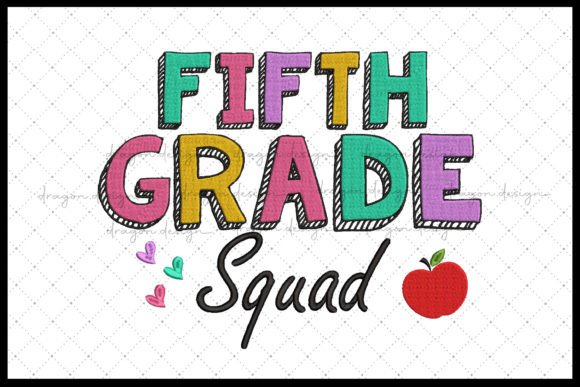
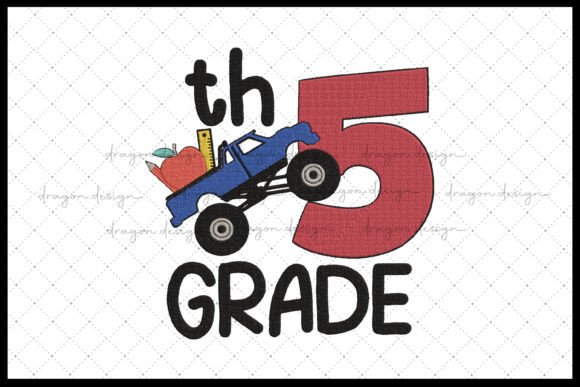
As an embroidery designer who’s developed collections for boutique brands and Etsy sellers over the past decade, I approach every Creative Fabrica embroidery file with two questions: Does it translate well to apparel—and does it elevate the finished product? When I first opened 5th Grade Back to School, I was struck by its confident balance of youthful energy and clean execution. It’s not overly cutesy or cartoonish—no exaggerated fonts or clip-art motifs. Instead, it carries a warm, inclusive charm: friendly lettering, subtle decorative accents (think tiny stars or minimal flourishes), and intentional spacing that breathes on fabric. The visual personality lands squarely in “playful yet polished”—ideal for small clothing brands aiming for authenticity over trend-chasing.
Sweatshirt & Hoodie Performance: Where It Shines
5th Grade Back to School works exceptionally well for sweatshirt embroidery—especially on neutral heather grays, oatmeals, and soft pastel hoodies. Its moderate stitch density holds up beautifully on fleece without overwhelming the texture, and the design scales gracefully from 3.5” chest placement to a larger 5” back layout. On oversized garments, it avoids looking lost or dwarfed thanks to balanced weight distribution across letters and elements. For sleeve accents or pocket placements, I’d recommend using just the “5th Grade” portion—clean, legible, and brand-consistent. As a hoodie design, it reads instantly at arm’s length but rewards closer inspection with thoughtful details like slightly rounded terminals and even thread coverage.
Real-World Fabric & Placement Notes
Before stitching on your first batch, test 5th Grade Back to School on scrap fabric that matches your production garment—especially if you’re working with ribbed cuffs, curved yokes, or stretchy blends. On dark apparel, opt for high-contrast thread colors (ivory, sky blue, or true red) to maintain clarity. Avoid placing dense sections directly over thick seams or hems where puckering can occur. For t-shirt embroidery, pair it with a lightweight cutaway stabilizer to prevent shadowing; on denim jackets or tote bags, a medium-weight tear-away works well. Keep in mind that tiny decorative elements may soften slightly on plush fabrics—so if crispness is critical, verify stitch definition in the digital embroidery file before hooping.
Where to Use It Thoughtfully
- Small chest placement: Works cleanly at 3.25–4”, but avoid going smaller—the letterforms retain readability down to ~3”, though fine details become less distinct.
- Stretchy fabric: Stabilize generously; consider basting the hoop to prevent shifting during embroidery.
- Fleece or brushed cotton: Trim backing threads carefully post-stitch—loose fibers can catch in delicate areas.
- Curved surfaces (like hood peaks): Use a curved-hoop adapter or reposition the design slightly lower for flatter registration.
Commercial Value & Brand Alignment
For Etsy sellers and small shop owners, 5th Grade Back to School isn’t just decoration—it’s a subtle trust signal. Parents scrolling for back-to-school apparel respond to sincerity, not flash. This machine embroidery design feels handmade and considered, reinforcing your boutique brand’s voice. When styled in lifestyle product photos—say, a child wearing a custom hoodie beside a backpack and notebook—it reads as part of a cohesive seasonal story. That consistency builds recognition across listings, social media graphics, and printable mockups. Customers begin associating your shop with warmth, attention to detail, and age-appropriate charm—not generic mass-market vibes.
Design Integrity Across Applications
I’ve tested 5th Grade Back to School across multiple formats: as a standalone chest motif on crewneck sweatshirts, as a coordinated set with monogram initials on tote bags, and even scaled down for toddler-sized tees. In every case, it retained visual strength without sacrificing legibility. Its proportions hold up in commercial embroidery workflows—no excessive jump stitches, no overlapping trims that cause thread breaks on multi-head machines. For digital sellers offering editable files, this design integrates smoothly into layered mockup templates. And because it avoids trendy typography or dated graphics, it won’t feel outdated by next August—making it a smart long-term addition to your Back To School library.
Practical Designer Checklist Before Production
- Confirm hoop size compatibility—some versions may be optimized for 4x4 or 5x7 hoops; check Creative Fabrica product details.
- Review thread color suggestions in the file notes—if none are listed, test three contrast options on your base fabric.
- Inspect stitch density visually in your embroidery software—look for tight clusters that could sink into fleece or distort on lightweight knits.
- Compare placement options: center chest vs. left chest vs. sleeve—each changes how customers engage with the design.
- Verify licensing terms before selling finished apparel—Creative Fabrica’s commercial license varies by seller and file type.
- Always run a test stitch on the exact garment you’ll use—even slight variations in fabric texture impact final appearance.
Final Thoughts for Creative Entrepreneurs
If you're curating a small batch of custom apparel for back-to-school season—or building a repeatable collection for future years—5th Grade Back to School delivers quiet professionalism with heart. It doesn’t shout. It connects. Whether you're a solo craftsperson stitching one-of-a-kind pieces or a small team scaling sweatshirt embroidery for local schools and PTA groups, this embroidery file supports your vision without demanding extra labor or compromise. It fits seamlessly into a thoughtful workflow: easy to digitize further, simple to match with complementary designs, and strong enough to stand alone. In a market saturated with loud, fast-turnaround graphics, its sincerity is its strongest feature—and that’s something no algorithm can replicate.