Fifth Grade Squad
First Impressions: Playful, Confident, and Ready for Real Life
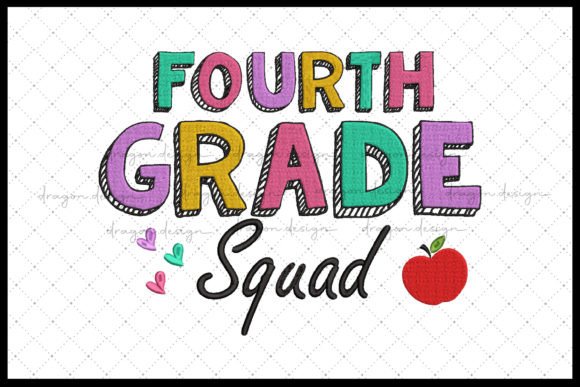
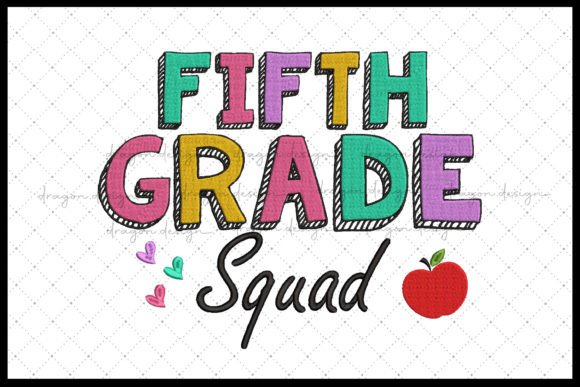
When I opened Fifth Grade Squad, I didn’t just see a back-to-school embroidery file—I saw a mood. It’s bright without being cloying, structured but not rigid, and carries that unmistakable energy of kids stepping into a new chapter: curious, capable, and quietly proud. The layout feels balanced—no overcrowded corners or awkward negative space—and the lettering has clean curves and consistent weight. It’s not overly detailed, which is smart: this isn’t a portrait or a botanical; it’s a statement. That makes Fifth Grade Squad an ideal machine embroidery design for makers who want personality without precision pressure.
A Real Project Test: Embroidering a Cotton Canvas Tote for a Teacher Gift
Last week, I stitched Fifth Grade Squad onto a natural cotton canvas tote bag—intended as a “welcome back” gift for a fifth-grade teacher. I used medium-weight cutaway stabilizer, standard 40-weight rayon thread, and a 5x7 hoop. The result? Crisp satin-stitched outlines, smooth fill-stitch areas with no puckering, and legible text even at 3.5 inches wide. What stood out wasn’t just how well it stitched—it was how *recognizable* it felt. Parents and colleagues paused when they saw it. Not because it’s flashy, but because it signals something specific: warmth, age-appropriate pride, and quiet professionalism. That kind of resonance matters—especially for handmade products meant to be gifted, displayed, or sold.
Where Fifth Grade Squad Shines (and Where It Asks for Thought)
Fifth Grade Squad works beautifully on:
- Custom apparel: Sweatshirts, crewneck tees, and denim jackets—especially over chest or left sleeve placements. The design’s horizontal flow suits relaxed fits without fighting fabric drape.
- Tote bag design and apron embroidery: Its centered rhythm reads clearly from a distance and holds up under daily use.
- Baby embroidery and nursery decor: On a soft organic cotton onesie or pillow cover, it reads sweet—not saccharine—and avoids infantilizing the grade level.
- Embroidered patch applications: Clean edges and moderate stitch density mean it’ll hold up well when heat-applied or sewn on.
- Holiday embroidery and back-to-school gifts: Paired with a handwritten card or simple packaging, it elevates a basic item into a meaningful, personalized gift.
But here’s where attention matters:
- Small hoop sizes: If you’re working in a 4x4 hoop, check whether the full design fits comfortably—or if you’ll need to resize. Shrinking too far risks losing clarity in the letterforms.
- Textured fabrics like terry cloth or bouclé: The design’s clean lines can get visually lost. Consider simplifying thread colors or adding a subtle outline stitch for definition.
- Stretchy fabric and thin fabric: Always pair with appropriate stabilizer—lightweight cutaway for knits, tear-away for stable wovens. Skipping this step invites distortion, especially around curved letter shapes.
- Dark fabric: While Fifth Grade Squad looks great in high-contrast thread (e.g., white on navy), avoid ultra-fine details in dark-on-dark combos—those small interior spaces may not read clearly after stitching.
- Curved surfaces like caps: The design’s width makes it better suited for front panels than curved crowns unless resized and re-digitized for stability.
What It Adds to Your Handmade Product—Beyond the Stitch
This isn’t just about technical execution. Fifth Grade Squad contributes to perceived value. When customers see a cleanly stitched, age-respectful phrase on a sweatshirt or tote, they don’t think “cute font.” They think, “This maker understands my audience.” That builds trust—especially for Etsy sellers and small shop owners curating collections around milestones (first day of school, graduation, teacher appreciation). It also supports brand consistency: whether you’re selling embroidered patches as digital embroidery files or finished products, Fifth Grade Squad delivers tone cohesion across formats.
For craft business owners building printable mockups or digital product previews, this design scales well. It reads clearly in black-and-white mockups, making it easy to show variations without color dependency. And for holiday embroidery or wedding gifts (yes—even fifth-grade siblings get invited!), its upbeat-but-grounded vibe keeps things sincere.
Practical Designer Notes Before You Stitch
Before committing to your first run—whether for client work, an Etsy listing, or a craft fair batch—do these six things:
- Test the design on scrap fabric that matches your final project’s weight and stretch.
- Check thread color contrast on both light and dark backgrounds—especially for small interior letters or decorative accents.
- Review stitch density: Dense fill areas may require slower speeds or extra stabilizer on delicate substrates.
- Confirm hoop size compatibility—don’t assume it fits your standard hoop without measuring.
- Inspect small details under magnification: Are inner curves clean? Do connecting strokes hold integrity?
- Verify licensing before selling finished items or reselling the digital embroidery file. Commercial use rights aren’t automatic—even for back-to-school themes.
Final Thought: A Design That Serves Its Purpose—Without Overpromising
Fifth Grade Squad doesn’t try to be everything. It’s not a complex applique design, nor does it mimic hand-drawn whimsy. It’s confident in its simplicity—and that’s why it works so well in real embroidery projects. Whether you’re embroidering a tea towel for a classroom, prepping custom apparel for a school fundraiser, or building a cohesive line of boutique merchandise, this design delivers clarity, charm, and quiet professionalism. It reminds us that the best embroidery project isn’t always the most intricate—it’s the one that lands exactly where it’s meant to: seen, understood, and appreciated.